

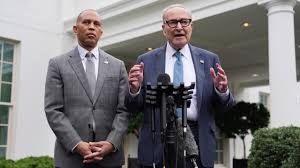
January 29, 2026 — Lawmakers in the United States Congress are locked in a high-stakes political battle that could trigger a partial government shutdown as early as Friday night unless a deal can be struck to approve funding for the Department of Homeland Security (DHS). While the broader federal budget has largely been agreed upon, disagreement about how — or even whether — to fund certain immigration enforcement agencies, particularly Immigration and Customs Enforcement (ICE), has become one of the sharpest flashpoints in Capitol Hill negotiations. reuters

Why DHS Funding Matters — and Why It’s So Contentious
Each year, Congress must pass a series of 12 appropriations bills to fund federal agencies through the end of the fiscal year (September 30). This year, six of those funding bills — including the one that covers DHS — remain unapproved by the Senate with a hard deadline looming at 12:01 a.m. Eastern on Saturday, January 30.
The DHS spending bill is particularly controversial because it includes tens of billions of dollars earmarked for agencies like ICE, the U.S. Customs and Border Protection (CBP), the Federal Emergency Management Agency (FEMA), the Transportation Security Administration (TSA), and the U.S. Coast Guard. While many of these elements are considered routine, the focus of the current standoff is the role and accountability of ICE and similar immigration enforcement operations.
The Spark: Minneapolis Shootings and Rising Outrage
The immediate catalyst for the current budget crisis was a series of fatal shootings in Minneapolis involving federal immigration enforcement agents. Most recently, a Border Patrol agent fatally shot 37-year-old ICU nurse Alex Pretti during an enforcement operation, only weeks after another Minneapolis resident, Renée Good, was killed in a separate federal action.
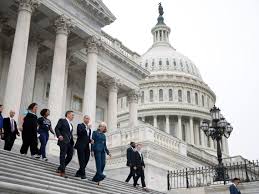
Public outrage has surged, particularly among Democratic lawmakers, civil rights groups, and faith leaders, who argue that the actions of federal immigration agents have been overly aggressive and poorly accountable. Demonstrations, vigils, and protest efforts have intensified across the country, with critics saying that federal agents operate without adequate oversight.
For many Democrats, the congressional budget debate has become inseparable from demands for deep reforms to immigration enforcement policies, especially ICE. They contend that simply funding DHS as usual without meaningful changes would endorse what they view as a pattern of unchecked, violent actions by federal agents.
Democrats’ Demands: Reform Before Funding
On January 28, Senate Democratic Leader Chuck Schumer (D-NY) laid out a set of three main demands tied to funding DHS — particularly its immigration enforcement components:
- Tightening warrant protocols — requiring immigration agents to obtain judicial warrants under many circumstances and necessitating closer coordination with state and local law enforcement.
- Accountability and conduct standards — establishing a uniform federal code of conduct for immigration agents and ensuring independent investigations into use-of-force incidents.
- Transparency and identification — banning masks for agents, requiring visible identification, and mandating body cameras during enforcement operations.
These proposals are intended to address public concerns about the lack of accountability within DHS’s enforcement components, particularly ICE and CBP, and to align federal agents more closely with the norms applied to local law enforcement.
While Democrats have framed these demands as “common-sense reforms,” Republicans and the White House have largely resisted linking funding to policy changes, describing such conditions — especially at short notice ahead of the shutdown deadline — as unreasonable.
Negotiations and the White House Response
In the early hours of Thursday, leaders from both parties were reported to be in last-minute negotiations with the White House in hopes of averting or minimizing the duration of a shutdown. One potential compromise floated involves passing five of the six remaining appropriations bills and using a short-term stopgap measure solely for DHS funding to buy more time for negotiations on policy reforms.
Senate Majority Leader John Thune (R-SD) has publicly encouraged direct talks between Schumer and President Trump’s administration on a deal that might reconcile Democratic concerns without forcing a government closure. However, as of late Thursday afternoon, no breakthrough agreement has been publicly announced.
From the White House perspective, the Democratic demands are seen not as constructive legislative issues but as a brinkmanship tactic that could force a partial shutdown. A senior White House official told reporters that insisting on reforms at the last minute was tantamount to “a demand for a partial government shutdown.”
The Risk of a Shutdown — and Its Impacts
If negotiations fail, a partial government shutdown could begin as early as Friday night once the current funding expires. In past shutdowns, many federal services deemed “non-essential” are furloughed, and hundreds of thousands of government employees may be sent home without pay. But agencies tied to national security and public safety often continue operating even during funding lapses.
For example, FEMA has sufficient funds in its Disaster Relief Fund to respond to ongoing emergencies, including a widespread winter storm affecting much of the United States, even if parts of the DHS budget lapse.
Some experts also note that certain DHS operations — including ICE and CBP — might continue under previously allocated funding or other budget mechanisms, even if appropriations bills are not fully enacted. However, other branches of DHS — like TSA security screening and non-disaster FEMA functions — could halt or be dramatically scaled back during a shutdown.
Political Stakes and Broader Implications
The standoff has broader political implications beyond just funding deadlines. For Democrats, pushing for policy reforms tied to DHS is part of a larger effort to curtail what they describe as unchecked use of force by federal immigration agents under the current administration. Many Democratic lawmakers have also criticized colleagues within their own party who supported the DHS funding bill in the House earlier this month, arguing those votes failed to heed public concerns about ICE’s conduct.
Republicans, meanwhile, have defended the DHS spending levels and argue that linking funding to specific policy changes at the eleventh hour risks unnecessary disruption to federal services. Many Republicans also contend that ICE and CBP roles remain essential to national security and border control and should not be compromised by partisan negotiations.
Beyond Capitol Hill, the potential shutdown and surrounding debate highlight deep divisions within American politics over immigration policy, enforcement accountability, and the proper balance between national security and civil liberties. Public opinion is split, with some calling for a shutdown to pressure reform and others warning of the tangible harms a shutdown could pose — particularly to federal workers, services, and citizens reliant on government programs.
Conclusion: A Nation at a Legislative Crossroads
As January 30 approaches, the U.S. faces yet another familiar but politically fraught showdown: Can Congress fund its government while also addressing deep policy disputes that have inflamed the public and lawmakers alike? The answer remains uncertain.
What is clear is that the fate of DHS funding — and with it, the threat of a partial government shutdown — now hinges on whether lawmakers can reconcile starkly different visions for federal immigration enforcement in an intensely polarized political environment. The coming hours will be critical, with millions watching to see whether compromise prevails or whether partisan divides once again bring the federal government to a halt.
See more.. Shirley Raines Death: The TikTok Star Who Fed the Homeless 2026